


I have spent more than a decade watching wheels spin across poker tables and casino floors, so I know the difference between a genuine pattern and a player’s hopeful imagination. The concept of a roulette dealer signature explained here is straightforward: some dealers release the ball with enough consistency that the outcome drifts toward a predictable zone. It is not a guarantee of profit, and it never replaces proper bankroll discipline, but it is a real phenomenon worth understanding before you chase it at a live table.
You can test your own observation skills without risking a cent by visiting le bandit demo, where the interface lets you watch ball behaviour without the pressure of a live croupier. The idea behind a dealer signature is that a consistent release speed, combined with a similar rotor speed, can cause the ball to land in a repeating segment over a long session. That is the theory, and it is the part most players latch onto when they hear stories about beaten wheels.
How the Theory Actually Works on a Live Table
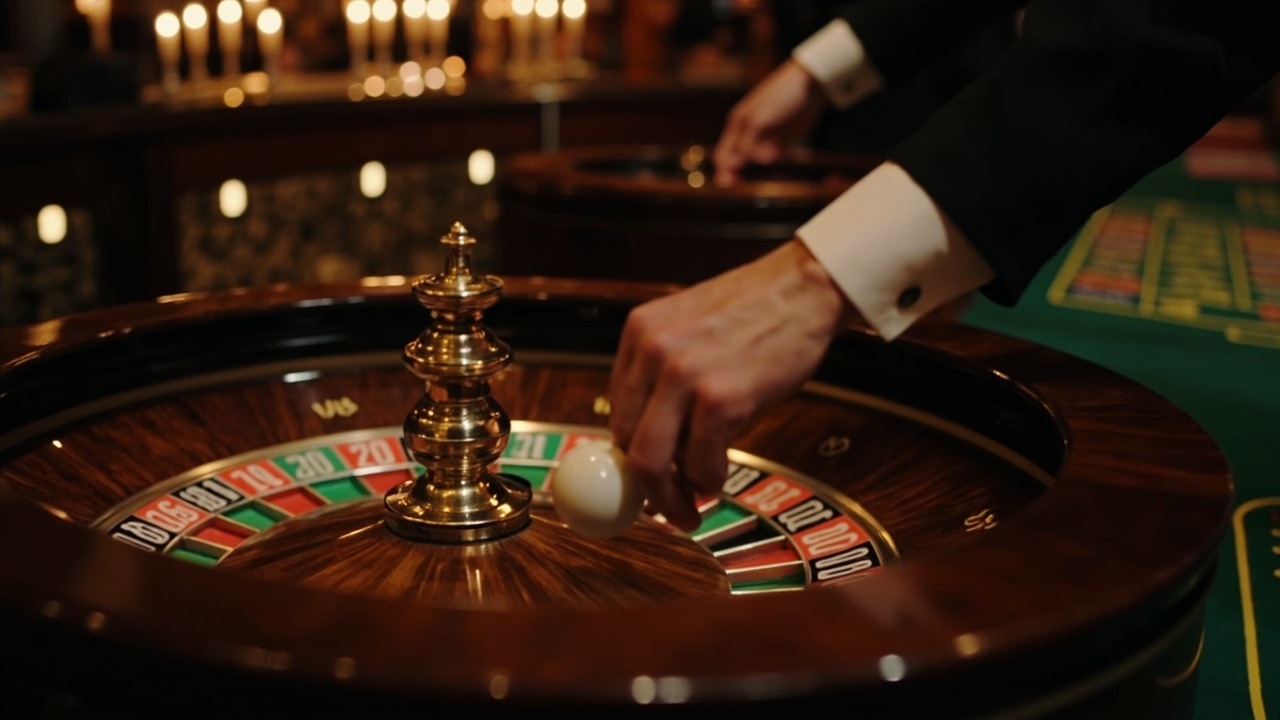
The mechanics are simple enough to describe, but harder to exploit in practice. A dealer trains to drop the ball at a steady height and with a repeatable flick, while the rotor turns at a fixed pace. If both variables stay within a narrow band, the ball tends to decelerate and fall into a similar section of the wheel across multiple spins. That is where the phrase roulette dealer signature explained becomes useful: it is not about predicting a single number, but about noticing a statistical lean over dozens of spins.
I have seen operators in Geelong pubs track these tendencies informally, long before SP betting was driven underground by the arrival of legal TABs. The difference today is that modern wheels are balanced more carefully, and dealers rotate frequently, which breaks any emerging pattern before it becomes useful. A player who wants to study this properly needs a quiet arvo, a notepad, and the patience to record at least fifty spins before drawing any conclusions.
The practical steps look like this: Electronic Arcade Roulette Between Tradition and
- Pick a single dealer and watch them for at least twenty minutes before placing any chips.
- Record the winning number and the approximate rotor speed for each spin.
- Mark any cluster of results that falls within the same quadrant of the wheel.
- Compare the cluster against a random distribution to see whether the lean is real or just noise.
- Stop tracking the moment the dealer changes pace, switches wheels, or the table gets busy.
That process is slow, and it is exactly why most casual players never get past the storytelling stage.
Why the Edge Is Smaller Than the Stories Suggest
The hard truth is that a genuine signature, where one exists, usually offers a thin statistical lean rather than a reliable profit line. I have worked with affiliate partners who promote the idea as if it were a hidden system, but the reality is closer to a modest bias that can disappear the instant the casino swaps the wheel or the dealer changes their release. Even when a pattern holds for a session, variance can wipe out any small advantage in a single bad quarter of spins.
You can read a longer discussion of how modern tables blend old mechanics with digital oversight in electronic arcade roulette between tradition and digital play, which is worth a look if you want to understand why live signatures are harder to sustain than they were a decade ago. The industry has moved toward tighter wheel maintenance, more frequent dealer rotation, and surveillance that notices unusual betting patterns, so any edge has to be treated as temporary rather than permanent.

That is where my own judgement comes in: I would rather see a player treat a suspected signature as a observation exercise than as a money-making plan. If you are tracking results for fun and learning, fine, but if you are staking serious money on the assumption that a croupier will keep releasing the ball the same way all night, you are betting on consistency that the floor staff are actively trained to break.
How to Separate Observation From Wishful Thinking
A useful way to think about this is to separate what you can verify from what you are hoping to see. A real signature leaves a visible cluster over a large sample, while a random run can look patterned if you only watch twenty or thirty spins. That is why I always tell new players to set a sample size before they start drawing conclusions, and to ignore any theory that promises a fixed payout or a sure route to the black. le bandit demo
The same discipline applies to how you choose where to sit and what to watch. A busy table with constant dealer changes is a poor place to study consistency, while a quieter session with one croupier and a steady rotor gives you a better chance of seeing anything meaningful. If you are based near Geelong and you want a low-pressure environment to practise observation, look for a slower table rather than the busiest one in the room, because crowd noise and frequent rotations will ruin your notes before they mean anything.
I have also seen players confuse a hot streak with a signature, which is a different thing entirely. A streak is short-term variance, while a signature is a repeatable mechanical tendency, and mixing the two up is how people turn a fun observation into a costly mistake. The safest approach is to treat any pattern as provisional, keep your stakes modest, and walk away the moment the conditions change.
A dealer signature can be a fascinating thing to study, but it is not a shortcut to consistent returns. Treat it as a careful observation exercise, keep your bankroll discipline intact, and remember that the floor staff are there to keep the wheel unpredictable. If you enjoy watching for patterns, do it lightly and without expecting the wheel to pay you for your attention.