


It also does not erase the animal findings or the newer registry entry described above. The injection-site and injection-technique topics remain linked for context, but they do not validate a native-MOTS-c product. Personal reports may describe energy or sleep changes, but without a verifiable source and product context they cannot establish causation or a typical effect.
Daily dosing is the standard protocol, though some users dose 3–5 times per week at the higher end of the range. For now, the 5–10 mg daily subcutaneous range represents the best available evidence from translational research and community experience. The dose range is set to achieve meaningful AMPK pathway engagement based on the peptide’s observed effects on glucose metabolism — insulin sensitivity, and fatty acid oxidation. In landmark animal studies, MOTS-c prevented age-related insulin resistance and obesity even on high-fat diets. This is why MOTS-c has been described in the research literature as an “exercise mimetic”, it activates many of the same metabolic pathways that physical activity does.
MOTS-c is studied in metabolic health, exercise capacity, body composition, aging, bone metabolism, and inflammation. May help interpret muscle stress when intense training (muscle pain), or statin use is part of the context. Monitoring focuses on glucose, lipids, liver/kidney context, and muscle-stress context when training intensity is high.
Reduced inflammation
The FDA has yet to receive a submission for MOTS-c approval, and no formal clinical trials involving humans have been conducted so far. The pathways triggered by exercise (fasting), and caloric restriction are the same ones that lead to the designation of MOTS-c as an “exercise mimetic.” Nevertheless — observational data from humans (Reynolds et al.) validates that the levels of endogenous MOTS-c are biologically significant and have a correlation with metabolic health outcomes. According to Reynolds et al. (2021), circulating MOTS-c levels in humans are associated with both physical activity levels and markers of metabolic health. What to expect from MOTS-c peptide use — realistic timelines, biomarker changes, body composition, energy and endurance effects, and community reports.
MOTS-c Stacks

The 5–10 mg figure people actually use sits well below both. No published clinical trial has ever administered MOTS-c itself to humans, and no human pharmacokinetic data for it exists.

Several websites state that MOTS-c has completed a Phase 1 human safety study at doses up to 10 mg. It went into a Phase 1a/1b study for fatty liver disease and obesity — the first mitochondrial-derived peptide ever tested in humans. This is where the phrase “exercise mimetic” entered the MOTS-c conversation — and it is worth handling carefully.
Cycles described in research planning are 4 to 8 weeks on, with an off period of similar length. See the dosage chart table on this page for context. Lower-end planning is 5 mg twice weekly, higher-end is 10 mg two to three times weekly. Common research-planning anchor is 5 mg subcutaneous (2 to 3 times per week), in 4 to 8 week cycles.
Both activate AMPK, but they act on different primary tissues , metformin on the liver, MOTS-c on skeletal muscle,. For humans, most anecdotal reports describe noticeable changes in energy and exercise performance within 1-2 weeks. A single dose showed measurable effects on exercise performance in mice within 10 minutes. One fixes the power plant (the other changes its orders), which is why plenty of people run them together instead of picking one.
Human data for MOTS-C is very early stage – animal doses are not validated for human translation. One of the most striking findings in the MOTS-C literature is its correlation with human longevity. Exogenous MOTS-C administration activated many of the same skeletal muscle adaptations as endurance exercise (including AMPK activation), improved mitochondrial biogenesis, and enhanced metabolic efficiency. Reynolds et al. (2021) published a study in Nature Communications demonstrating that MOTS-C is itself an exercise-induced peptide – plasma MOTS-C rises with aerobic exercise in both humans and mice.
In the same paper (a weaker MOTS-c gene variant raised type 2 diabetes risk in men but not women), across 27,527 people. The common habit is to inject on training days, 30–60 minutes before the session, and never late in the evening, since trouble sleeping is a reported side effect. Scaled from mouse to human by body surface area — the Reynolds dose works out to roughly 85 mg per injection for a 70 kg person, so a 5 mg shot sits far below anything studied. More MOTS-c activity lines up with endurance, not power. Japanese sprint and power athletes carry a weaker MOTS-c gene variant more often than endurance athletes (6.5% vs 2.9%), and carriers had more fast-twitch fiber (Kumagai 2022).
Premier Vendors of MOTS-C

Discuss with your prescribing physician to prioritize based on your specific biomarkers and health objectives. This ‘exercise mimetic’ effect is most relevant for older adults with limited exercise capacity. No — but it mimics specific metabolic adaptations to endurance exercise at the cellular level. Whether this reflects causal protection or is a marker of other factors promoting longevity is still being studied.
Nobody has compared the two in people, so the lower weekly total is the cautious choice rather than a proven better one. The common MOTS-c peptide dosage is 5 mg injected subcutaneously three times a week on non-consecutive days (for 8–12 weeks followed by 4 weeks off), after a 1–2 week tolerance check at 2.5 mg twice a week. This is something most MOTS-c guides skip, and it matters more than people realize. But when the basics are in place (it can meaningfully shift how the body handles energy), stress, and recovery. For people who feel generally “inflamed” without a clear acute cause, this can be a meaningful benefit. This shows up most clearly in aerobic and endurance work.
To date, there have been no completed clinical trials involving human subjects. If you are considering research compounds, it is essential to consult with a qualified healthcare provider. Some researchers propose that these compounds may complement each other by targeting the same pathway from varying perspectives.
The recommendation for cycling—8-12 weeks on (followed by a 4-week off period—is grounded in a general principle applied to peptide therapies aimed at preventing desensitization of receptors and enabling evaluation of lasting effects), rather than being based on specific data from MOTS-c cycling. The frequency of dosing varies from once daily to three times a week, contingent upon the clinical objective and the patient’s individual response. A phase I safety trial involving healthy adults established that administering subcutaneous MOTS-c injections at doses up to 10 mg resulted in no serious adverse events, with a pharmacokinetic profile that supports dosing once daily or every other day. The 2015 Cell Metabolism study revealed that intraperitoneal injections of MOTS-c , 5 mg/kg, in mice on a high-fat diet effectively prevented obesity and insulin resistance, yielding results on fat mass, fasting glucose, and insulin sensitivity comparable to those of pharmaceutical interventions. Studies involving aging mouse models indicate that administering MOTS-c reduces the burden of senescent cells in metabolically active tissues and suppresses markers of the senescence-associated secretory phenotype (SASP). In this context, MOTS-c functions as an endogenous exercise mimetic by activating AMPK through the same molecular mechanisms influenced by exercise, albeit from within the body.
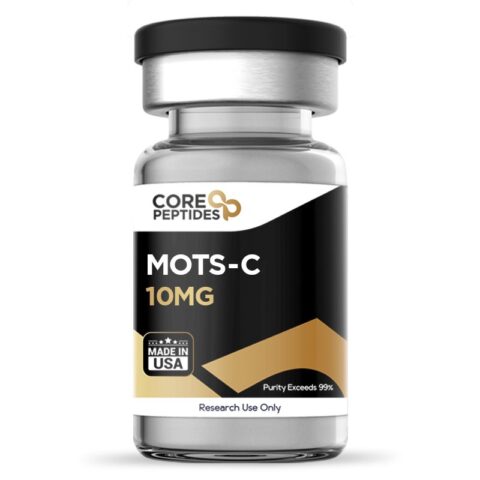
Given that MOTS-c is coded in mitochondrial DNA, researchers have investigated whether naturally occurring variants in its coding region relate to metabolic characteristics in specific populations. The efficacy of MOTS-c in humans has not been confirmed through large controlled trials, and this guide regards every benefit as “studied for” rather than proven. Although this mechanism is compelling, the treatment findings are derived from animal studies. A typical 10 mg vial, when reconstituted with 2 mL of bacteriostatic water, results in a concentration of 5 mg/mL, meaning that a 5 mg dose corresponds to 1.0 mL , 100 units on a U-100 insulin syringe,.